January 30, 2008

The Qur'an, Jesus, and Pluralism

I've never read the Qur'an (Koran), but I definitely would like to post-seminary. But while reading When Religion Becomes Evil by Kimball for class (a book about how all religions can turn toward violence and sin), I came across some interesting quotes from the Islamic Holy Book:

Here's some references to Jesus and the Trinity:

O People of the Book, do not exceed the bounds in your religion or say things about God save the truth. The Messiah, Jesus, son of Mary, is only a messenger of God, and his word that he conveyed to Mary, and a spirit from Him. So believe in God and his messengers and say not "Three." Stop. It is better for you. God is only one God. It is far removed from His majesty that He should have a son. (Qur'an 4:171)

O people of the Book, let us come to a common word between us and you, that we worship non but God, and that we associate nothing with Him, and that none of us take others for lords apart from God. (Qur'an 3:64)
These verses certainly make us think about our monotheistic claims.

What I really found interesting are these verses that seem to open interpretation for a radical inclusivism in Islam:
"If God has so willed, He would have created you one community, but [He has not so] that He may test you in what He has given you; so compete wiht one another in good works. To God you shall all return and He will tell you the truth aobut that which you have been disputing." (Qur'an 5:48)

January 28, 2008

Interlude, Truth Interrupted

Why so much time devoted to truth?
"I recently heard someone say that the motto of Christianity nowadays is “And now these three things remain: faith, hope and love. But the greatest of these is truth.”
via thecorner
And here's the problem when "truth" reigns over faith, hope, and love:

EDIT: The previous video was taken down, but now it's back up, so enjoy!

January 26, 2008

The Intimate Truth on Objective Truth, Pt. 3

If you've kept up so far with this series on truth: Pt. 1, Pt. 2; then you may be asking the seemingly perennial question? Than isn't truth simply relative? How can I know anything when everything is subjective? We have this need to know the truth, in our our limitedness, finiteness; we desire perfect, infinite knowledge.

I will deal more with relativity/subjectivity in Part 4, but for now let's deal simply with this need for objective truth: where does that come from?


With the birth of the scientific age and the modern period, thinkers like
Descartes, "I think therefore, I am" and later Kant who said religion must fit within the bounds of reason really influenced the way we think. Basically, they believed that if an object was placed under scientific scrutiny than it could be known objectively, because objectivity rids us of all our traditions, contexts, biases, and presuppositions. Thus, we can know the truth objectively because it exists "out there" beyond our sitz im leben.

I'm not arguing that the world does not exist "out there" beyond our human facilities, but I am saying that the only way to perceive the "out there" is with what is "in here:" our language, perceptions, and biases.
I'll get to pastoral reasons for my arguments later, but right now I'll just say the problem with accepting objectivity is "intellectual pride" that claims to know truth beyond our finite capabilities thus ending conflicts over truth.

Yet, this age of reason yielded us not one but two World Wars, the Holocaust was based on principles of reason, as well were the nightmares of
Hiroshima and Nagasaki. Where modernity tried to erase the fallible with the near infallible scientific approach to reality, the Christian stance on truth according to Scripture must be one of epistemological humility. We can only know this world from out limited perspective.

But does this simply lead to relativity? What do you think? Does this make you feel uncomfortable?


January 23, 2008

Organic? Smorganic.

Along with "perfect storm," "waterboarding," "wordsmithing," and other such overused words, "organic" made an appearance on Lake Superior University's "2008 List of Banished Words."
Look I agree that being "green" and buying "organic" are good things, but come on, you can get organic t-shirts and shoes! Not that I don't think we should be taking steps toward making our lives more sustainable and healthier in the USA, heck Jesus' parents were green :)


Here's the problem I think. Being green, environmental, and even organic are ways in which we can hide behind the real problem, all the while assuaging our guilt. So what's the real problem? Consumerism: You want it? Buy it. Oh, but buy it green or organic, but still buy it.

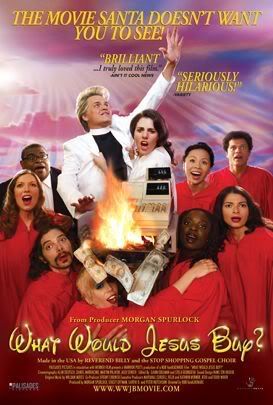
That's why, along with my friend Adam, I'm excited about this:


You can watch a trailer and the heart of Rev. Billy on youtube.

Not that I don't struggle with stuff, technolust, and such, but until we are willing to honestly deal with the greater issue of consumerism then being organic and green are secondary issues that we'll use to make ourselves feel better.

If you've made it to the end, then maybe you'd be up for a challenge. Click and play "Consumer Consequences" and see if the life you are living would be sustainable if everyone lived the way you do. The results may shock, anger, or embarrass you, but hopefully engender sustainable change in your life.


January 20, 2008

The Intimate Truth on Objective Truth, Pt. 2


In continuing to reveal the intimate truth on objective truth, we continue our discussion on all things truth, objective, and relational today. Don't miss part 1, before continuing into this series.

Thomas Kuhn in
The Structure of Scientific Revolutions argues that no scientific, objective truth exists apart from value assessments and a person's perspective. All truth is colored by a person's commitments, experiences, and enculturation. You don't have to listen carefully to hear the tides of relativity washing onto the shore of objectivity. Even classicist professor Allan Bloom's famous "objective" statement on relativity is a relative statement:
“There is one thing a professor can be absolutely certain of, almost every student entering into the university believes, or says he believes, that truth is relative.”
This statement is made relative by his biases, culture, and commitments. As a white male who had a bad experience teaching the classics in the '60's at Cornell, Bloom chose to ignore gender inclusive language by referring to speak generally of his students as "he" thus completely ignoring the feminist movement of the 60's. Also, with the rise of multiculturalism and new literature the classics fell on hard times, or at least lost the prestige Bloom felt they deserved.

Maybe this relative statement reveals that in our exploration for truth we just have to be "more" objective by submitting "more" to the primacy of reason. The answer to relativity is pure, objective reason right? We believe that all our commitments will be eclipsed in the light of reason. Reason trumps all other commitments. No!

In the Scripture when a person places their complete unadulterated trust or commitment in anything else than God for truth, life, worship, anything, its called idolatry. Yet, what we've failed to recognize is that reason has flown under the radar for too long as an idol. We don't recognize that the commitment to reason is just that, a commitment with no more a rational base than any other commitment whether to tradition, culture, or God.

Certainly humans can be committed to other things besides God such as environmentalism, but to place that thing over commitment to Christ is sin. In searching for truth, our first commitment must be to Christ, not rationality.
Truth is not found in objectivity, but relational fidelity. Thus when we allow final, authoritative hegemony of one tradition- the tradition of rationality- all other traditions we are in relation to are diminished or blurred.

Truth is much more holistic than objectivity and reason alone allows. Truth is best known when we are faithful to our relative perspectives while seeking intimate relation to this world, to God, to others, to whatever we are seeking to know.

The Greatness of Men

Some men are great, others we call great to massage the false facades of our culture so that our dreams and interests don't seem as vain as they truly are. Some might call Tom Brady of the NE Patriots legendary, a success story, a man of greatness. Why? Maybe because he has 3 SuperBowl Rings, along with many cultural accolades (Esquire- Best Dressed Celeb; People- "Top 50 Most Beautiful"), while dating supermodel Gisele Bundchen. Yet, as the video below, in a moment of transparency in an interview with "60 Minutes" Brady admits that he's not fulfilled. "There's gotta be something more to life.
"

Of course today, we celebrate the youngest recipient of the Nobel Peace Prize: Martin Luther King Jr. In celebrating the birth of Dr. King, we in turn are celebrating the cause for his dreams, the catalyst for change in a world filled with segregated hate: the crucified and resurrected Christ. It was this hope that gave MLK Jr. the imagination and audacity to proclaim these words in his Nobel Peace Prize,
"I accept this award today with an abiding faith in America and an audacious faith in the future of mankind. I refuse to accept despair as the final response to the ambiguities of history. I refuse to accept the idea that the "isness" of man's present nature makes him morally incapable of reaching up for the eternal "oughtness" that forever confronts him. I refuse to accept the idea that man is mere flotsam and jetsam in the river of life, unable to influence the unfolding events which surround him. I refuse to accept the view that mankind is so tragically bound to the starless midnight of racism and war that the bright daybreak of peace and brotherhood can never become a reality. I refuse to accept the cynical notion that nation after nation must spiral down a militaristic stairway into the hell of thermonuclear destruction. I believe that unarmed truth and unconditional love will have the final word in reality. This is why right, temporarily defeated, is stronger than evil triumphant."
These are the words of a truly great man, inspired by a truly great God.

January 18, 2008

Dawkins, not too different from the pew goer?

Richard Dawkins is one the most brilliant scholars of our time, but that's not what makes him similar to many people who gather together on Sundays claiming themselves "Christian."

For those who may not know Dawkins, the title of this post should shock (okay, maybe not shock) you a little because he is one of the strongest voices in contemporary atheism. His The God Delusion has sold over 1.5 million copies, not bad for a book published in 2006.

So what makes your average pew goer similar to Dawkins? Folk religion. This BBC news story reveals that Dawkins not only does not want to purge Christianity from the UK, but he enjoys singing Christmas carols. Dawkins is quoted saying, "If there's any threat these sort of things, I think you will find it comes from rival religions and not from atheists."

Although overstated, I do think there are people who file in the door on Sunday morning because they "enjoy singing carols" in a sense, but not much else. Furthermore, we too often blame others, especially other religions for the weaknesses of the church or for the attacks on Christianity. Why take responsibility and try to... I don't know, repent and change, when you can blame others?

As time progresses in this country and the West, Christianity will more and more become a folk religion (which it already has for some) providing meaning, rituals, and holidays for our lives; but no real transformation or witness. To that I say our churches are full of atheists.

January 17, 2008

The Intimate Truth on Objective Truth, Pt. 1


Truth, how do we know it? In a recent discussion in class about history, I stated that all histories are subjective renderings of an author's perspective on a time, place, situation, personality(s), etc. Often, when I state such claims, that objective truth is not possible, I'm confronted with numerable remarks. The strongest argument I hear I think is that we must not lose out quest for objectivity in spite of subjectivity as if there is a middle way.

But I believe that a holistic view of truth must abandon objective truth claims. Before diving deep into more particularities of my argument, let me make some general statements about truth. The objective project seeks truth as distant, abstract, and universal (or absolute).

But is this the presentation of truth in the Scripture? In proverbs lady truth stands in the streets hollering for people's attention. Overall, the picture in the Bible of truth is one of a decidedly personal, relational, and social construct.

As a matter of fact, what most modern Bible translation render as "faithful," the hebrew word "emeth" in the KJV was translated as "truth."

To know truth is a matter of covenant fidelity. Psalm 85 claims that when God comes to Israel (vs. 9) then love and truth will meet, and truth will spring up from the ground . For the prophet Hosea, the lack of truth meant not error, but bloodshed.

Think about a marriage with no truth or very little. The end result is a broken relationship, divorce. So, the biblical ideals of truth as covenant faithfulness and relationality render the abstract and distant ideas of truth as meaningless. Truth then is fleshed out in sociocultural, political, and economic relations much the same way faith fleshes itself in practice.

January 15, 2008

Spring Semester Starts


The spring semester has started. I know, I know, I haven't been on this thing for months, well basically since last semester. I'm hoping to get back into writing on here more about life, ministry, faith, and theology.

Above are basically the books I'll be using for this semester minus a few. I'm really look forward to this semester and the oncoming summer in which I'll be going to India for 4 weeks. Once I return I'll be finishing my semester with my mentorship at a local ministry.

My class schedule looks to be challenging but really good. I'm taking "The Missional Church" where we're studying the missional nature of the church. Each person in class is reading one person or movement and bringing that perspective to class on the nature, structure, and theology of the church. As you can see from the above pic, I'm Jurgen Moltmann.

I'm also taking "Religion & Worldviews," "Social Justice," and "The Story of Christian Mission."

September 18, 2007

Fall '07 Semester in Swing

The fall semester is full throttle right now, so I thought I would take some time to share what I'm taking and reading.

Principles, Methods, and Strategies: I think that anyone desiring to be involved in local ministry here in the states should be in the mission concentration at Truett. It's only here that we read books that really get you to think, and our discussion usually take place outside of the box, teetering on revolution every day. I'm enjoying this class much more than I originally thought I would. Outside of some articles on missionary roles, we are reading:

John Nevius- The Planting and Developing of Missionary Churches
Jonathan Bonk- Missions and Money
Thomas Kuhn- The Structure of Scientific Revolutions
Roland Allen- The Spontaneous Expansion of the Church

Biblical Themes and Theology: in this class we are picking up a new hermeneutic for reading the Bible- primarily missional. I'm preparing a paper on "Reconciling Economics," a biblical look at reconciliation and economics.

Jonathan Wright- The Mission of God
David Smith- Mission After Christendom
Harry Boer- Pentecost and Missions

TnT 3 (Texts and Traditions): This class is one of the reasons I came to Truett. Although, I must admit that Truett teaches theology historically by reading the primary sources, I am disappointed that my teacher this semester is a systematic theologian. Therefore, we are reading the primary sources, but these sources are structured around the Apostles Creed.

Karl Barth- Dogmatics in Outline
Wolfhart Pannenberg- The Apostles' Creed in Light of Todays Questions
Joseph Ratzinger- Introduction to Christianity
Hans Kung- Credo
Roger Can Harn- Exploring & Proclaiming the Apostles' Creed
we are also reading some Moltmann, Schleiermacher, Achetemeier, and Zannoni

Scriptures 4- Somehow in one semester we are going to cover the New Testament from Romans to Revelation. This class is reading intensive to say the least. I am doing my research paper on Paul and his relationship to Israel in Rom. 9-11.

Raymond Brown- An Intro to the New Testament
Meeks and Fitzgerald- Norton's The Writings of St. Paul
David Horrell- An Intro to the Study of Paul
Jouette Bassler- Navigating Paul
Richard Bauckham- The Theology of the Book of Revelation


As you can tell, this semester is quite reading intensive. With that said, I do have a few other reads I am trying to get through for myself that may or may not happen.

Levitt & Dubner- Freakonomics: A Rogue Economist Explores the Hidden Side of Everything
Either Thomas Friedman' The World is Flat or The Lexus and The Olive Tree
Since are not reading much of Multmann, I plan on working through one of these on my book shelf: The Crucified God, Theology of Hope, or The Trinity and the Kingdom
And lastly, maybe to pick up for our Bible Study- Walsh & Keesmatt- Colossians Remixed


September 17, 2007

Worship as Solidarity

I've been mulling over worship the last few weeks, ever since Brian McLaren visited Truett to talk about the challenge of radio orthodoxy. In the hour discussion, Brian shared some lyrics from this song.

Then a week later I read in Jonathan Wright's The Mission of God that mission creates praise and vice versa. And tonight I read Sally Morgenthaler's article over at Allelon. She sums up her experience with worship evangelism, which she can be rightly called the initiator or innovator of this movement. In grief, she admits the church has become narcissistic and misuses worship as the chief means of getting people inside the walls of the church building. As she described the perception of a nonbeliever experiencing this worship evangelism, I was struck by this quote,

No sad songs. No angry songs. Songs about desperation, but none about despair. Worship for the perfect. The already arrived. The good-looking, inoffensive, and nice. No wonder the unchurched aren't interested.
The church has become insulated from reality by its own worship. In Romans 12, Paul urges Christians to worship. He does not say that we should gather on one single day and allow nonbelievers to gather to us. He does not say that we should spend all our time, effort, and money on a single event for adore and praise God. He does not say that we should seek relevant songs or tunes. No, instead Paul says that worship by being transformed, living our lives as a sacrifice. A sacrifice! Now, if you allow me to pull this out of the "spiritual" talk of daily quiet times or prayer times into reality; I think Paul is saying that we must go into the world, into our communities, into our neighborhoods and seek solidarity. For most of us, that means opening ourselves to the grief and suffering of those who don't have their lives together. That means giving up our self-referential, self-sustaining, narcissistic, consumeristic lifestyles in order that others may be experience wholeness.

Most nonbelievers will find Sunday morning worship at most churches irrelevant and probably annoying. Who can fit into this picture of continual happiness and praise? Is there any room for the suffering? Is there any room for the pain of the world? Is there any room for the grief and tears shed over those who don't yet know God?

So, what do we do with Sunday morning worship? Do away with it altogether? No, connect it with reality. We realize that worship is a time for Christians to be transformed for God's mission, not a time for happiness or comfort. This should be a time of discomfort sometimes, lamenting the pain in the world as well as the weakness of the church to meet it. Then, and only then will true praise for God flow, since it is here that we meet God. In our weakness, seeking to find him in his strenght among our neighbors, communities, and nonchurched.

August 28, 2007

Our Sad American Dream's

After reading this story on CNN, I was prompted to write this prayer.

Creator God, we live in a world that so desperately needs your handWe pray for those drowned by the floods of hurricane KatrinaThose whose voices have been drowned out by the spectators who smile
And mock the reality of death and desperation
Who in hopes of sustaining a self centered realityAllow their dreams and visions blind them to the dismal conditions.So God we pray that as you brought your righteous hand to those who cried out Under the drowning oppression of the EgyptiansTo raise up a Moses to deliver the despised and homelessWe pray that you would bring down your hand to those neglected by the massesIgnite burning bushes in the church So that we may preserve the lives of those you loveSo that we may not vacate where others vacation.We trust God that as you flooded the River full of RedThat it would be your cross that brings down The chariots of Complacency and ApathyDestroy the Spears of Indifference at the expense of the ‘forgotten’And drown the injustice of the self centered American dreamAMEN

July 24, 2007

What I've been up to...

Well, I've taken this second part of the summer to Sabbath a little and not do too much at all especially blog. I've definitely felt like there have been some things to flesh out and to say, but I've been partly lazy and partly just enjoying the freedom of being where I'm at right now. I'm not taking any classes for this second part of the the summer so I have more time to read what I want and to watch all kinds of movies.


What I'm reading:


I'm about half way into this very important work by Volf. This heavily theological and philosophical work explores human relationships and the need for more than the modern altar call for freedom, but for reconciliation both with God and one another. I highly recommend this book, and I still have a ways to go. Though I do warn, this is not for the faint of heart. Volf writes sometimes in a heavily convoluted and abstract manner. I'm not reading much else because of this one, it's taking its toll on me while transforming me.


I've also enjoyed Wright's "fresh perspective" on Paul. I'm prepping myself for this fall semester in which I'm taking a class covering the NT minus the Gospels and Acts. I've only read two other works by Wright, but I really like his interpretation. He takes a more 1st century take on what words like Messiah, Christ, Kingdom, Apocalypse, Covenant, and Creation mean. Instead of some escapist radical founder of some new religion, Paul must be understood within his Jewish context, as a Jew who followed Jesus Christ. Book read for the 3 chapters I've gotten into.


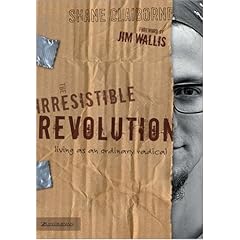
Shane Claiborne is the result of studying under Tony Campolo, and how when you really let the Gospel take root in you heart, it'll wreck your life. Shane tells many stories that reveal the beauty and brokenness of this world and the dire need for Christians to drop the wardrobe of conservative, republican, Americanized Christianity for something more radical. Radical in the sense that he desires a return to more biblical. Shane's one of the founders of the Simple Way in Philly, who are a group of people I deeply respect that are seeking solidarity with the poor, redeeming broken places, and sepaking against legalisms that destroy relationships. I read this book in a few days, easy, but well worth the effort. I recommend it to anyone seeking out a Christianity other than what we've been sold in Lifeway or TBN.


I've also been reading many commentaries and books on Matt. 5-7, the Sermon on the Mount, which I've had the pleasure of working through in Sunday School with the college students. I'm hoping God wrecks their life with this challenging piece. For the most part I'm using Living the Sermon on the Mount by Stassen, Reading the Sermon...by Talbert, Seeking the Kingdom by Dockery and my dean Dr. David Garland, Divine Conspiracy by Willard, Cost of Discipleship by Bonhoeffer, Sermon on... by Guellich, Sermon on...by Clarence Jordan from the Koinonia farm, and NT Wright's commentary on Matthew.


Since, my wife is a school teacher she has the summer off, so we've watch too many movies takes to blockbuster.com. Here's a few that I would recommend and are very good movies.


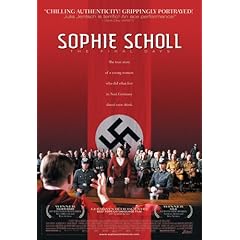
Sophie Scholl was a movie played at Truett movie night that I missed, but thought I would go ahead and rent it. The movie was really good. I went back and rewatched some of the more intense dialogue between Sophie and her interrogators...brilliant writing. This movie gave me a new sense of perspective for those in Germany who were 1) brainwashed by the lies and story of Nazi Germany and 2) those who were opposed to it. This movie may be one of my favorites, I really like that nonviolent resistance was the stance of the heroine and heroes of the movie.


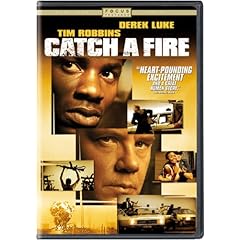
Catch a fire is set during the Apartheid, which sadly I'm way too ignorant on especially since it happened in my lifetime. This is a story of one man transformation from peaceful, to violent, back to peaceful. Focus films has created another social piece that speaks into the injustice of our world that still exists. Watch this one.


We actually went last night and watched the new Harry Potter movie. I'm not into the books, mostly because I'm reading other things, and have other fiction on my list right now that I'm trying to read. After that, the Potter series will still have to wait, but the movies will do. I think has been the best of the Potter movies and probably the darkest. I'm not that big of a fan of the whole series, but I enjoyed this movie well enough, so I would recommend it.


From what I can remember these have been the better of the movies I've seen this summer. With our free time, we've watched too many such as the Aliens Quadrilogy, Fast Food Nation, A Guide to Recognizing Your Saints, Shut Up and Sing, Road to Guantanamo, Smoke Signals (really good), Three Burials of Melquiades Estrada (also really good), Jesus Camp, The Mission (another good one), Freedom Writers, The Last King of Scotland, and this is just the tip of the iceberg. I do recommend any and all of these listed though, very good celluloid if you ask me.

June 8, 2007

Faith, Values, and Poverty: Politik

Something I've never been very good at is politics, keeping up with, understanding it all, remembering names and incidents, so this presidential election I have decided to follow the race more closely and vote (maybe) with an informed decision.

With that said, let's get to the good stuff. Recently the top three democratic presidential candidates gathered in connection to Sojourners for a forum on Faith, Values, and Poverty.
As I read the unofficial transcript I liked some things and did not like others. I thought I would share how I feel about the whole thing with a quote I came across from Bono, and ask what you think about the forum.

"They have taken language hostage. We wanted numbers but this is bureaubabble. ... It is not real in any language. We are looking for accountable language and numbers. I might be a rock star but I can count." - Bono

May 7, 2007

The Bitterfly Effect...


Bitterfly...an intentional play on words.

Christainity creates paradox: the Father, Son, and Spirit are one in the same but each individually unique; life is received ONLY in death; to receive on must give; to be made new on must be transformed, to be strong one must be nonviolent.

The paradox supplanted in my life lately is the anticipation of transformation. This summer, I am entering into a time of my life I am so very excited about, the very thought of this summer makes me a little nervous because I get so excited. Exciting/transforming for me= the college ministry at FBCgT, missional formation with my classmates, monastery prayer, and missional life together.

Why then are these opportunities a paradox? A butterfly becomes beautifully transformed by a grotesque, scary, and hard process. To be transformed is bittersweet. Absolutely sweet, but bitter nevertheless.

So, I face this summer and the rest of my life with the intentionality of continually being converted and transformed, knowing that this process will not be glamorous, easy, or fun. There will be good times, probably mostly good times. But good times are not the times that make things new. Thus, I anticipate and look forward to the transforming times when I will be revealed as a sinner in need of a mediator, priest, and King.

Bitterfly= the transformational process catalyzed by the grotesque, and it is to this that I wait.

April 28, 2007

Sacramental Mustang, Summer '07

So, here in a month or so we are going to move about 10 minutes down the road into a rent house in Morgan's Point Resort (fancy huh?). My semester will soon wrapping up and I'll have more time to focus on my ministry at the church and on the Mustang. I really want to get the Mustang at least mobile to help in moving it.

Update on Sacramental:

I've completely replaced the wiring harness, which is a long story, but right now the body/fuel pump harness and engine harness are from a 1993 'stang, while the dash harness is from a 1992. I've recently situated everything and tried to start it up but the fuel pump didn't come on. So, first I'm going to test the circuits and see if I can figure out the problem before having to put the 1993 dash harness. I may just need to go ahead and put the '93 harness in to make everything match up.

Once I can get the fuel pump wot work, I think I know the reason it has been running so badly. The main thing I was unsure of in setting up the engine was the valve train. I think my pushrods are not the correct length or the roller rockers are not adjusted right and the valves are being held up too long so that I'm not getting any power. I bought a pushrod length tester and will be fixing that if the problem is still occurring after I get the harnesses all lined up. Hopefully I can get Sacramental up and running to help move it and to just be done with it.

April 3, 2007

In God We Trust

How do people react when they think that God is on their side and when they believe that God condones violence?

A recent study held at both a religious and secular institution found some unsettling results. Both believers and nonbelievers are more likely to act violently when they believe that God is on their side and that God condones violence. Bushman, the main researcher says,
"Even among nonbelievers, if God says it's OK to retaliate, they are more aggressive. And that's the worry here. When God sanctions aggression, when God says it's OK to retaliate, people use that as justification for their own violent and aggressive behavior.
What I find most interesting about this study, is that unlike Sam Harris, Bushman has a personal, as well as professional interest in the research because he believes in God and reads the Bible almost daily. So, its important to reflect on Bushman's final words from the article:
"What worries me is when people use God as a justification for their violence. There are scriptures that say you should not take God's name in vain. This is the most extreme version of taking God's name in vain,"
I don't think most American Christian believe this, we don't get what it means to use God's name in vain. As a matter of fact, the conclusion of the article tells the situation and belief of most Christians I know.

Yet his own research shows that whether people consider
themselves believers or not, they are more likely to be aggressive,
perhaps even willing to start a war, if they think God is on their side.


March 31, 2007

Wonder-ful Trees

I love it when I stumble across something
that makes my imagination run wild.
Here's a link to the top 10 trees in the world,
which created a nice little escape into the crevices off my imagination to find myself and
my Creator.


Check it out! The oldest known tree is named
Methuselah and is dated to be around 4,838 years old. Now that's staying power.


God's creation is so much greater than anything we can contrive. Some of these trees are things of science fiction or J.R.R. Tolkien.

I would love too see these magnificent trees in real life. Especially those that have let man know what's up, like the one to the right.


Supposedly in this tree, you can see shapes that resemble elephants and jaguars, thus making it the "Tree of Life." Very cool.

March 29, 2007

Bursting Forth of Deconstructionism

I'll begin by admitting my own ignorance of deconstructionism. I haven't read anyone outside of Caputo, and only snippets and secondary sources on many of the philosophers of deconstructionism. This post is meant to be a follow-up on Tony Jones post over at churchandpomo that I posted below.

Although the comment below is powerful, I missed the forest for the trees. One problem I have with "my" understanding of deconstructionism is that it leaves us stripped and bare with no bearing, but Jones argues something different. He calls it a hermeneutic of bursting through our own understandings. The final goal of this bursting is justice.

The images that I have with this bursting forth is one that allows us to hold onto who we are and what we've learned while moving beyond those experiences. If deconstructionism truly does this, and Jones is not just biased toward this system, then I'm very sympathetic. Otherwise, until I get some Derrida, Kearney, and Caputo under my belt I'm unsure.