Lent is a refreshing time, refreshing in the sense that we are driven back, reminded, and disciplined toward that which gives us life: God. Traditionally, Christians practice a certain discipline that removes one activity, not because it is necessarily "bad," but because that activity or thing distracts us from the real source of abundant life. Fasting gives us time to feast, as WWJE (What Would Jesus Eat) reminds us here and here,
Lent always awakens my imagination. What can or do I need to fast from? What would be meaningful? What can I focus or feast on: prayer, Bible memorization, service? Much of my thought as of late as been on economics, consumerism, and globalization. Today I thought, "what would it look like to fast from globalization, and what would I feast on?"
In case your unsure what that -ization word means, here's Gerald Daly's definition that sums it up well: globalization "is characterized by the concentration of economic control in multinational firms and financial institutions, worldwide networks of production, exchange, communication and knowldge, transnational capital, and a freer flow of labor, goods, services, and information."
So, as I was pondering what it would look like to fast from the above, I thought...it's inescapable. I can't fast from globalization, it's not simply a personal choice but rather a national way of doing life. I could not buy any new consumer products and buy all my food local, but realistically this is not disengaging completely from globalization. All my past commodities, my car, the house I rent, the clothes I wear, the roads I drive on, the places I shop, the building I work in, everything has been produced my the grand narrative of globilization.
Driving this narrative is the myth of progress. With the crises of ecological disasters, global economic breakdown, exclusion of the poor, and the rise of conflicts because of resources we've seen that "progress" is unsustainable. Our markets, businesses, churches, communities, the "American Dream' is about sustaining the unsustainable all for the myth of progress.
As my Lenten reflection has lead me, the solution to globalized progress cannot simply leave behind the system, it's inescapable. Even my quest for a solution is driven by the narrative of progress..."what's next, how do we solve this problem?"
Maybe the recent economic meltdown is a reminder of how life actually works, not in progressive steps but in seasons, cyclical seasons of life and death, joy and pain, ups and downs. A civilization, a global village cannot exist on a story that does not embrace life through death, but rather does all that it can to ignore death, aging, and anything non-young.
My Lenten reflection leads me to think that solutions to globalization and a culture of progress cannot be as simple as "dumping" the system, but must provide real world answers in real world economics. This may mean compromising for the best possible solution at the time. Whatever it means, it means feasting on a God who invites us into seasons, Lent, Advent, Death, Resurrection. Truly the only way to live alternatively is to live within a different narrative, thus for Lent we should fast from progress and feast on reality.
March 6, 2009


March 2, 2009
February 26, 2009
February 21, 2009
Current Retreat 2009: McLaren, Butler, Yee
 Tomorrow after worship at First Baptist, my fellowship and faith family, my beautiful wife and I fly out to Orlando to spend 3 or so days at the Current Retreat. Current is a young leaders retreat put on annually for Baptists by Baptists...Cooperative Baptist Fellowship. I'm excited about the keynote speaker, Brian McLaren as well as Amy Butler (pastor of Calvary Baptist in D.C) and Joy Yee (from San Fran's 19th Ave. Bapt.).
I'm pretty pumped about simply getting away to have this intentional time to be with young leaders...I'll finally get to meet the many other residents in the CBF pastoral resident program I'm in...and to be with Charlotte for a few days. Plus, CBF put us up in a hotel in down town Orlando. I won't be able to tell if I'm excited about Brian too much, until I figure out what he's speaking on. There are some things I'm sure he'll bring up, but hopefully he'll have some fresh perspectives and there will be oppurtunities for good dialogue.
Depending on wifi access at the church Current is being hosted at, I may or may not be blogging through McLaren's, Yee's, and Butler's presentations.
And by the way, FBC now has a blog.
True Intimacy
Human relationships easily become possessive. Our hearts so much desire to be loved that we are inclined to cling to the person who offers us love, affection, friendship, care, or support. Once we have seen or felt a hint of love, we want more of it. That explains why lovers so often bicker with each other. Lovers' quarrels are quarrels between people who want more of each other than they are able or willing to give.via.
It is very hard for love not to become possessive because our hearts look for perfect love and no human being is capable of that. Only God can offer perfect love. Therefore, the art of loving includes the art of giving one another space. When we invade one another's space and do not allow the other to be his or her own free person, we cause great suffering in our relationships. But when we give another space to move and share our gifts, true intimacy becomes possible.
-Henri Nouwen
February 18, 2009
February 15, 2009
Not Violent Enough?
I recently had a very interesting and thought provoking day listening to Pete Rollins, hosted by an interesting faith community, Journey Imperfect Faith Community. In two sessions, Pete laid out theoretical and philosophical approaches to doubt and community than he talked about practicing those thoughts.
There were several and very intelligent insights Rollins talked about, some which can be found in his books or blog. Rollins argues for a constant place of doubting God, an a/theistic approach to faith which bends toward the Christian tradition. In ways I think Rollins is capturing a faith hermeneutic of suspicion that is 1) very contextual to Ireland, 2) intrinsic to who he is and how is approaches faith, 3) important for the Church at large, especially in the West, 4) not for everyone, and 4) still in the process of being understood.
With that last note, something I really appreciate about his thought and practice is that Rollins doesn't need to have everything theologized and figured out before acting, but instead acts and than creates a theology around those actions in retrospect. Why I think this is important is because Rollins and this approach really allows people to participate in creating culture, community, and faith or non-faith.
The talk he gave is also a blog title, "Fundamentalism isn't too violent, It isn't violent enough." I do not like his use of the term "violent," but this post is well worth the read. Maybe his use of "violence" is right in the context of changing social structures, yet I still want to steer clear of the term "violence." The post is full of great thoughts, check it out.
There were several and very intelligent insights Rollins talked about, some which can be found in his books or blog. Rollins argues for a constant place of doubting God, an a/theistic approach to faith which bends toward the Christian tradition. In ways I think Rollins is capturing a faith hermeneutic of suspicion that is 1) very contextual to Ireland, 2) intrinsic to who he is and how is approaches faith, 3) important for the Church at large, especially in the West, 4) not for everyone, and 4) still in the process of being understood.
With that last note, something I really appreciate about his thought and practice is that Rollins doesn't need to have everything theologized and figured out before acting, but instead acts and than creates a theology around those actions in retrospect. Why I think this is important is because Rollins and this approach really allows people to participate in creating culture, community, and faith or non-faith.
The talk he gave is also a blog title, "Fundamentalism isn't too violent, It isn't violent enough." I do not like his use of the term "violent," but this post is well worth the read. Maybe his use of "violence" is right in the context of changing social structures, yet I still want to steer clear of the term "violence." The post is full of great thoughts, check it out.
February 9, 2009
Shenk & a missional ecclesiology
Wilbert Shenk asks, “What can we say are the main features of a missional ecclesiology? At least five things will characterize a missional church:
• The missional church is intensely aware that its priority is to witness to the kingdom of God so that people are being liberated from the oppressive power of idols. The church is consciously discerning and naming the idols.
• The church is deeply committed to the world but is not controlled by the world. In other words, the church knows that it has been placed in the world but is never to be subservient to the world. The absence of this tension indicates that the church has made its peace with the world.
• Mission is patterned after the example of Jesus the Messiah; that is, mission is cruciform. The vision of Isaiah 53 is being fulfilled as God’s people serve and witness. The cross is central.
• The missional church has a keen awareness of the eschaton. In Jesus Christ the kingdom has been inaugurated, but the people of God eagerly await the consummation of the kingdom.
• Church structures will serve and support its mission to the world. Human cultures inevitably change over time. The church must stay abreast of its changing cultural context, which will require the dismantling of archaic forms that impede missionary witness and the devising of new structures that support the mission
New Wineskins for New Wine: Toward a Post-Christendom Ecclesiology
via.
• The missional church is intensely aware that its priority is to witness to the kingdom of God so that people are being liberated from the oppressive power of idols. The church is consciously discerning and naming the idols.
• The church is deeply committed to the world but is not controlled by the world. In other words, the church knows that it has been placed in the world but is never to be subservient to the world. The absence of this tension indicates that the church has made its peace with the world.
• Mission is patterned after the example of Jesus the Messiah; that is, mission is cruciform. The vision of Isaiah 53 is being fulfilled as God’s people serve and witness. The cross is central.
• The missional church has a keen awareness of the eschaton. In Jesus Christ the kingdom has been inaugurated, but the people of God eagerly await the consummation of the kingdom.
• Church structures will serve and support its mission to the world. Human cultures inevitably change over time. The church must stay abreast of its changing cultural context, which will require the dismantling of archaic forms that impede missionary witness and the devising of new structures that support the mission
New Wineskins for New Wine: Toward a Post-Christendom Ecclesiology
via.
February 5, 2009
Sermon on Psalm 147: Praise. Praise?
I read these words in Psalm 147 and even before I get to the second verse I have to stop and ask, what kind of world did the Psalmist live in?
“Praise the Lord. How good it is to sing praises, how pleasant and fitting!”
Last Tuesday, I drove the church bus to the airport with Ahmed, an Iraqi case manager for the Texas Refugee Services. We met and picked up an Iraqi refugee family: a mother who knew some English and 5 children who spoke only Arabic.
We loaded the bus with their 7 bags before heading to their new home: the Villages of Lamer, a low income housing on North Lamar. These 7 bags represented the little bit of home they could bring with them to this strange and foreign land to puzzle their lives’ together. 7 bags don’t seem like much, but as Ahmed informed me, Iraqi’s tend to bring a lot. I guess a lot of luggage is 7 bags when compared to the one or no bags of African or Myanmar refugees bring.
At the Villages we found their apartments. The small third floor apt where the mother and three youngest children would reside, and the smaller apartment where the older boys would live. Each semi-decorated apartment was disheartening for me to walk into. This wasn’t home.
But it wasn’t the loneliness of these scantily decorated apt’s that broke the family, but rather the distance. As I drove Ahmed back to his offices, he told me that the boys were distraught that they’d have to be so far from their family in the complex…the complete opposite side.
Didn’t the Psalmist know that our world has wars and violence that tears people from their homes and places them in fear, discomfort, and brokenness. Wars that violate innocents and destroy the ability to praise.
Was the Psalmists world so different from ours where people’s hearts are filled with fear because of the loss of jobs, the deep grief over the loss of a son at the hands of a tragic accident or suicide, or the confusion over the loss of a parent or child due to sickness or cancer?
Praise God. Praise God?
Do we praise God because he’s some sort of narcissist who commands and needs our adoration. Does God demand our praise out of his own superficial vanity?
If the Psalmist is emphasizing praise as an imperative to ignore our world of suffering and pain or to reinforce Gods vanity, then maybe the atheists, Sam Harris and Richard Dawkins are right, our ancient book leads us to mere delusion.
But we don’t have to guess at the world of the Psalmist. We do know some things. As Ann mentioned a few weeks ago, our current Book of Psalms is actually 5 books placed together. And in this final 5th, where Psalm 147 resides we can infer that the community that would read and sing these words had experienced the harshest of tragedies imaginable for an Israelite.
The Southern Kingdom of Israel, the indestructible Kingdom of God’s Temple presence in Jerusalem has been conquered. The Israelites have been sent out into exile and the Temple destroyed. It’s truly amazing that the Jewish faith still exists to this day.
See the normal procedure in ancient Mesopotamia, was to change gods if you were conquered, because that meant your god was weak or false. What should have happened in this moment of defeat and exile, is that the Israelites should have given up on YHWH who allowed them to be conquered for Marduk or Baal.
OT theologian Walter Brueggemann distinguishes the Psalms in three categories: Psalms of orientation, disorientation, and reorientation.
Psalms of orientation praise God for how the world works, and how God blesses humanity, especially his people, how life works.
Psalms of disorientation or Lament Psalms, have God’s people crying out in their suffering and pain, these are about how life doesn’t work.
Finally, Psalms of reorientation are where God makes possibilities new, and recreates the broken world so new life is possible in the midst of exile, destruction, cancer, the loss of jobs, broken relationships, and despair.
The Psalm from our Psalmist tonight is one of reorientation: the possibility of new life.
With exile and destruction on his mind, and possibly with its marks on his body; the Psalmist declares in the foretaste of hope that God builds up Jerusalem, gathers the exiles, heals the brokenhearted, binds the wounded.
Flannery O’Connor puts words to this experience of praising God in the midst of situations of despair, pain, and oppression: when she says, “grace comes sometimes like a kick in the teeth, leaving us broken, wholly unable any longer to deny our need.”
Grace is a reminder that we need God, and dependence on God is faith. So praise in the midst and messiness of life transforms and shapes our faith’s ability to respond and with a new orientation see God and our situation differently.
Praise in song and music has historically empowered oppressed people’s faith, from the inside to the outside: from despair to hope, from captivity to freedom. One thinks of the power of African American spirituals.
Cornell West, in the documentary about modern day human slavery and trafficking, Call and Response, says:
“The music itself coming out of, especially black people in America, but of course its true for voices all around the world, is very much about this freedom; freedom which is spiritual, so when George Clinton said, ‘Free your mind and your ass will follow: the paradox of freedom is you would have, you have to experience the foretaste of freedom before you become part of a freedom movement.”
God wants us to praise him because God wants to free the world. God wants us to be free from sickness, despair, hate, and loneliness.
We need praise to know the appropriate response to suffering and injustice. Praise grounds us in faith in God, so within our situations of pain, neglect, depression, and violence we can have a foretaste of new life, of healing, of resurrection.
We do not praise God in ignorance or naïveté, but we praise God in solidarity and hope that love and justice will prevail, that peace will come, and that every knee will bow in an overwhelming response to God’s overwhelming love for us.
As Henri Nouwen wrote:
“Worship, to me, is constantly to say, “Yes’ to God’s love; to say, ‘Lord, I love you too.’ All of our life should be worship. Every occasion in our time should be an occasion to say, ‘Yes, I love you too.” That signals a change of heart.”
Praising God in the midst of the brokenness of life and sin, equips us with the appropriate response. Praise is the paradoxical tool of love that forms us for action and activism.
Praise is the paradox that allows us to affirm that grace can come to us in the ugliest of situations, so that when we cry out: “My God, My God, Why Have you forsaken me,” we stand in solidarity with our Lord. We are able to pick up our cross and know, as Bono has said:
“God is in the slums, in the cardboard boxes where the poor play house… God is in the silence of a mother who has infected her child with a virus that will end both their lives… God is in the cries heard under the rubble of war… God is in the debris of wasted opportunity and lives, and God is with us if we are with them.”
Let us pray:
Praise God, for God so loved the world that he gave us his only Son.
Praise God, for God so love the world that he gave.
Praise God, for God so loved the world
Praise God, for God.
Praise God.
Amen.
“Praise the Lord. How good it is to sing praises, how pleasant and fitting!”
Last Tuesday, I drove the church bus to the airport with Ahmed, an Iraqi case manager for the Texas Refugee Services. We met and picked up an Iraqi refugee family: a mother who knew some English and 5 children who spoke only Arabic.
We loaded the bus with their 7 bags before heading to their new home: the Villages of Lamer, a low income housing on North Lamar. These 7 bags represented the little bit of home they could bring with them to this strange and foreign land to puzzle their lives’ together. 7 bags don’t seem like much, but as Ahmed informed me, Iraqi’s tend to bring a lot. I guess a lot of luggage is 7 bags when compared to the one or no bags of African or Myanmar refugees bring.
At the Villages we found their apartments. The small third floor apt where the mother and three youngest children would reside, and the smaller apartment where the older boys would live. Each semi-decorated apartment was disheartening for me to walk into. This wasn’t home.
But it wasn’t the loneliness of these scantily decorated apt’s that broke the family, but rather the distance. As I drove Ahmed back to his offices, he told me that the boys were distraught that they’d have to be so far from their family in the complex…the complete opposite side.
Didn’t the Psalmist know that our world has wars and violence that tears people from their homes and places them in fear, discomfort, and brokenness. Wars that violate innocents and destroy the ability to praise.
Was the Psalmists world so different from ours where people’s hearts are filled with fear because of the loss of jobs, the deep grief over the loss of a son at the hands of a tragic accident or suicide, or the confusion over the loss of a parent or child due to sickness or cancer?
Praise God. Praise God?
Do we praise God because he’s some sort of narcissist who commands and needs our adoration. Does God demand our praise out of his own superficial vanity?
If the Psalmist is emphasizing praise as an imperative to ignore our world of suffering and pain or to reinforce Gods vanity, then maybe the atheists, Sam Harris and Richard Dawkins are right, our ancient book leads us to mere delusion.
But we don’t have to guess at the world of the Psalmist. We do know some things. As Ann mentioned a few weeks ago, our current Book of Psalms is actually 5 books placed together. And in this final 5th, where Psalm 147 resides we can infer that the community that would read and sing these words had experienced the harshest of tragedies imaginable for an Israelite.
The Southern Kingdom of Israel, the indestructible Kingdom of God’s Temple presence in Jerusalem has been conquered. The Israelites have been sent out into exile and the Temple destroyed. It’s truly amazing that the Jewish faith still exists to this day.
See the normal procedure in ancient Mesopotamia, was to change gods if you were conquered, because that meant your god was weak or false. What should have happened in this moment of defeat and exile, is that the Israelites should have given up on YHWH who allowed them to be conquered for Marduk or Baal.
OT theologian Walter Brueggemann distinguishes the Psalms in three categories: Psalms of orientation, disorientation, and reorientation.
Psalms of orientation praise God for how the world works, and how God blesses humanity, especially his people, how life works.
Psalms of disorientation or Lament Psalms, have God’s people crying out in their suffering and pain, these are about how life doesn’t work.
Finally, Psalms of reorientation are where God makes possibilities new, and recreates the broken world so new life is possible in the midst of exile, destruction, cancer, the loss of jobs, broken relationships, and despair.
The Psalm from our Psalmist tonight is one of reorientation: the possibility of new life.
With exile and destruction on his mind, and possibly with its marks on his body; the Psalmist declares in the foretaste of hope that God builds up Jerusalem, gathers the exiles, heals the brokenhearted, binds the wounded.
Flannery O’Connor puts words to this experience of praising God in the midst of situations of despair, pain, and oppression: when she says, “grace comes sometimes like a kick in the teeth, leaving us broken, wholly unable any longer to deny our need.”
Grace is a reminder that we need God, and dependence on God is faith. So praise in the midst and messiness of life transforms and shapes our faith’s ability to respond and with a new orientation see God and our situation differently.
Praise in song and music has historically empowered oppressed people’s faith, from the inside to the outside: from despair to hope, from captivity to freedom. One thinks of the power of African American spirituals.
Cornell West, in the documentary about modern day human slavery and trafficking, Call and Response, says:
“The music itself coming out of, especially black people in America, but of course its true for voices all around the world, is very much about this freedom; freedom which is spiritual, so when George Clinton said, ‘Free your mind and your ass will follow: the paradox of freedom is you would have, you have to experience the foretaste of freedom before you become part of a freedom movement.”
God wants us to praise him because God wants to free the world. God wants us to be free from sickness, despair, hate, and loneliness.
We need praise to know the appropriate response to suffering and injustice. Praise grounds us in faith in God, so within our situations of pain, neglect, depression, and violence we can have a foretaste of new life, of healing, of resurrection.
We do not praise God in ignorance or naïveté, but we praise God in solidarity and hope that love and justice will prevail, that peace will come, and that every knee will bow in an overwhelming response to God’s overwhelming love for us.
As Henri Nouwen wrote:
“Worship, to me, is constantly to say, “Yes’ to God’s love; to say, ‘Lord, I love you too.’ All of our life should be worship. Every occasion in our time should be an occasion to say, ‘Yes, I love you too.” That signals a change of heart.”
Praising God in the midst of the brokenness of life and sin, equips us with the appropriate response. Praise is the paradoxical tool of love that forms us for action and activism.
Praise is the paradox that allows us to affirm that grace can come to us in the ugliest of situations, so that when we cry out: “My God, My God, Why Have you forsaken me,” we stand in solidarity with our Lord. We are able to pick up our cross and know, as Bono has said:
“God is in the slums, in the cardboard boxes where the poor play house… God is in the silence of a mother who has infected her child with a virus that will end both their lives… God is in the cries heard under the rubble of war… God is in the debris of wasted opportunity and lives, and God is with us if we are with them.”
Let us pray:
Praise God, for God so loved the world that he gave us his only Son.
Praise God, for God so love the world that he gave.
Praise God, for God so loved the world
Praise God, for God.
Praise God.
Amen.
February 4, 2009
Rohr & It's Just Emerging
If you are not already listening to the HomebrewedChristianity podcast, then you should subscribe today. These two guys, one a friend from my days as a Crusader at UMHB, interview on a regular basis important and wonderful Christian thinkers like Phyllis Tickle, Walter Brueggemann, John Dominic Crossan, Brian McLaren, Leron Shults, Richard Rohr, John Cobb, etc.
Recently, they interviewed Rohr on contemplation, activism and the emerging church. I enjoyed the interview and Rohr's articulation. There was one statement though that Rohr made that struck me wrong. In his reflection on the emerging church, he says:
Why harp on this? It's not because I do not like Rohr or the emerging church, but exactly the opposite. This all goes back to a post from a few weeks ago on the commoficiation of the church. With the fear that I too am going to be overly simplistic and narrow, I feel that the single strongest influences on the formation of our culture and thus spiritual communities/people are consumerism and commodity fetish. The results of this culture are both positive and negative. Much of the emerging church movement can be understood through these lenses of commidification.
I'll be following up on these ideas, but whatever the emerging church is, it can not simply be boiled down to a statement that it's just happening because of the Spirit.
Recently, they interviewed Rohr on contemplation, activism and the emerging church. I enjoyed the interview and Rohr's articulation. There was one statement though that Rohr made that struck me wrong. In his reflection on the emerging church, he says:
"this mentality is emerging simultaneously, in many places...this tells me that this has to be the work of the Holy Spirit because there's no one angrily creating a reform or a schism or an attack, it's just emerging" (emphasis added).The disconcerting tone here is the naivety Rohr interprets this movement of traditions being willing to listen and open up to one another to find truths within each one in the Christian tradition. The lack of a central authority or place does not equate into a inexplainable movement of the Spirit that just happend. Certainly we are struggling to articulate terms and concepts to understand the changes in our world: postmodern, globalization, etc, but there are sociological, philosophical, and economic predicates determining the human condition. His statements seem to create an unhealthy perspective that singles religious life separate from the culture and globalization.
Why harp on this? It's not because I do not like Rohr or the emerging church, but exactly the opposite. This all goes back to a post from a few weeks ago on the commoficiation of the church. With the fear that I too am going to be overly simplistic and narrow, I feel that the single strongest influences on the formation of our culture and thus spiritual communities/people are consumerism and commodity fetish. The results of this culture are both positive and negative. Much of the emerging church movement can be understood through these lenses of commidification.
I'll be following up on these ideas, but whatever the emerging church is, it can not simply be boiled down to a statement that it's just happening because of the Spirit.
February 1, 2009
Don't Sweat It, Jesus said...

"The poor you will always have with you." I find it interesting to hear people say that they think Jesus meant that there will always be poor in the world. While I think there are multifarious reasons for wanting to read Jesus' words here as literally as possible: to assuage our guilt for not caring about the poor, to assuage our guilt for not helping when we could, we've been taught to read it this way, we need an excuse for poverty, etc; I still do not understand why we take these words found in Mark 14 so literally.
Jesus must have literally meant these words (which are not even a commandment, but a quote from Deuteronomy), but there is no way he could have meant literally that we sell our possessions to follow him, or to turn the other cheek, give up your cloak, or love your enemy.
Actually, what Jesus is referring to here in Mark 14 is that the law requires an open handed disposition toward the poor, so he was turning the hypocritical concern of the disciples for the poor on its head. If you must take something away from this passage and apply in so woodenly and literally don't let it be to assuage your or my affluence. What God desires is that his people must give to and care for those who cannot care for themselves.
Part of the solution might be flipping the above dilemma, switching the literal reading of Jesus' words in Mark 14 with the many commands that Jesus "could not have literally meant." Love your enemy, bless those who curse you, give away your possessions to the poor, and pick up your cross."
Of all the things Jesus said to take literally...
January 28, 2009
January 19, 2009
In Honor of Today
As we move toward a momentous Inauguration of the 44th President of the USA who will give his speech in front of a building built by slaves, may we look back and remember Martin Luther King Jr. and the many other prophets, activists, and truth-tellers who made this day possible, the Inauguration of an African American to the highest office in our country.
Today is a day not to celebrate the holiness of MLK or Barack Obama, but the effect that a normal man with temptations, trials, and imperfections can have on a nation. May we remember that these men reflect the people who have elected them, listened to them, and who these men have been the voice for. As we look back, let us look forward and see that there is still work to be done, reconciliation to be made, forgiveness to be given, and justice to be poured out. Thank you Martin Luther King Jr, Barack Obama, and the many others who've been given hope and who have given hope.
January 16, 2009
The Emerging Commodification of the Church
I do have my hang ups with how much time, energy, resources, thought, and planning goes into a single day of the week, Sunday. I've been brooding over this fact for some time now, but haven't come to any real conclusions about how I feel. In the "emerging missional church (EMC)" conversation, attractional vs. missional battle lines have been drawn and Sunday morning has become a topic often battered by a dualistic perspective that paints a strawman for the burning.
David Fitch, who has constantly been a helpful voice in this EMC conversation, recently wrote a good post on this issue referencing to Zizek's "decaffeinated belief:"
The power of consumer culture and the commodification of everything is that religious seekers can take objects, beliefs, and pieces of traditions and lift them out of their context to be used in whatever way they like. They can have their cake and eat it too, because they simply cut off the baggage from where those traditions arose.
In some respects, I believe this weakens the ability of emerging churches to form people for Kingdom work, because the main tool for combatting commodification is immersion in a religious community who emphasizes its deep religious tradition (baggage and all) for the formation of disciples. I know this is a generalization, but emerging churches are heavily influences by the culture of consumerism because they tend to be planted by those on the cutting edge of consumer culture.
Of course, I've excluded from this conversation "seeker churches," who attract people to church Sunday mornings by having a great rock show and a funny preacher (because I'm sympathetic to EMC). Sunday morning should be about formation:
My main concern though, is that churches critically engage culture so that contextualization is healthy (meaning the gospel doesn't get subsumed or overpowered by the culture). Our culture is a product of late capitalism, consumerism, and commodification; so we need traditions and narratives that will equip us to live counterculturally. We need Sunday mornings baggage and all to be unenjoyable, uncomfortable, and formative.
If you've made it this far, you might also be interested in Fitch's conversation over the epistemology of missiology and ecclesiology.
David Fitch, who has constantly been a helpful voice in this EMC conversation, recently wrote a good post on this issue referencing to Zizek's "decaffeinated belief:"
Zizek argues that when we say “I enjoy my religion” this implies that I don’t take it TOO seriously. For we really don’t want to take it too seriously (this is what the fundamentalists do according to Zizek). We keep it at a distance so to appear to be a Christian with all of it comforts and accoutrements yet not requiring any great disruption to a comfortable way of life. This distance, between the subject and the Symbolic Order, is what allows the subject’s Christianity (or religion) to be subsumed by the existing order.The existing order that controls Western culture is the power of the spectacle produced by consumer culture. We commodify everything including our faith. Sunday becomes about receiving religious goods. Pastors are recognizing this growing trend and
…agree that a growing number of worshipers are talking or sitting through the congregational singing writing notes during the special music, showing up 10-15 minutes late, not worried about interrupting anything or anyone. One pastor shared that a congregant stopped attending worship opting to stay home and worship with a church on television. When asked about this, the congregant responded, “Why does it matter where I watch the service?” Another pastor commented that people treat everything in the service as if it were a movie preview and it is not until the feature presentation (the sermon) that people really start paying attention. Or in other churches with a more contemporary style of worship a pastor stated, “Once the ‘concert’ is over, they just settle in waiting for a sermon.”Most church plants are in the business of Christian reconfiguration, they steal Christians from churches in the area instead of leading people to faith (and this is NOT an overstatement). My growing concern for the "emerging church" is that it preys on the sensabilities of its consumer culture, thus utilizing culture uncritically or being used by culture.
The power of consumer culture and the commodification of everything is that religious seekers can take objects, beliefs, and pieces of traditions and lift them out of their context to be used in whatever way they like. They can have their cake and eat it too, because they simply cut off the baggage from where those traditions arose.
In some respects, I believe this weakens the ability of emerging churches to form people for Kingdom work, because the main tool for combatting commodification is immersion in a religious community who emphasizes its deep religious tradition (baggage and all) for the formation of disciples. I know this is a generalization, but emerging churches are heavily influences by the culture of consumerism because they tend to be planted by those on the cutting edge of consumer culture.
Of course, I've excluded from this conversation "seeker churches," who attract people to church Sunday mornings by having a great rock show and a funny preacher (because I'm sympathetic to EMC). Sunday morning should be about formation:
Deep traditions like lectio divina, intentional community, monastic practices, authenticity, and vulnerability are all very important, but so are the communities, traditions, and histories they have grown up in. Much of the EMC conversation is reactionary and deconstructive (which is fine, I understand), but there is something unhealthy about simply cutting ties with communities of faith that tend to have baggage because they've been around for 50, 100, or 150 years. Of course, this critique works in the inverse. Communities with baggage need to be listening to churches who are concerned about doing and being church differently.I think this is a mistake. For the missional church communities require a regular practice for the shaping and forming of a people into the Life with God, the Mission of God. Missional people do not grow on trees. If then we would see people formed into the Missio Dei we must order our worship so as to be encountered by the living God. We must learn how to preach not as information but as proclamation and invite people into the Mission. The real presence at the Table must be the center of our gathering, our lives and our community. If we would see people formed into the Missio Dei, our gatherings must take on liturgical shape, a way of inviting people into the prayers, confessions and affirmations of the alive relationship we have with the living God of Mission. We must learn how to listen, interpret Scripture for what God is doing among us and in the world, hear God and then respond to God. This should be the character of our Sunday morning gatherings.
This kind of gathering should be both easier and harder to plan than any kind of programming approach we have hitherto been used to. It should be simpler and less focused on excellence of performance. It should not cost near as much in time, resourses and planning. It should be able to be done in a living room with three to thirty people or in a larger sanctuary with 200. Yet this kind of gathering takes more discernment of the Spirit, theological wisdom, historical sensitivity than we have been used to in the protestant church of our evangelical past (we haven’t paid attention to theology of worship in evangelical church). This way can lead us out of the wilderness of decaffeinated worship.
My main concern though, is that churches critically engage culture so that contextualization is healthy (meaning the gospel doesn't get subsumed or overpowered by the culture). Our culture is a product of late capitalism, consumerism, and commodification; so we need traditions and narratives that will equip us to live counterculturally. We need Sunday mornings baggage and all to be unenjoyable, uncomfortable, and formative.
If you've made it this far, you might also be interested in Fitch's conversation over the epistemology of missiology and ecclesiology.
January 14, 2009
Acting Faith
 Faith is a strange reality. All humans whether Christian, Jewish, agnostic, atheistic, scientific, whatever practice faith. Faith deals with our ultimate concerns and how we appropriate those concerns. So if I believe that the world is ultimately material and that problems are solvable through scientific reason, then I will put my faith in science. Not that we do not divide our faith, but normally people tend to have a single overarching idea, substance, person, or deity to place their faith in.
Faith is undergirded, strengthened, and even produced by action. We tend to believe in what we experience, trust what we know. Because we are humans with bodies, our minds and hearts tend to line up when we act out in faith according to our actions.
So, if you are struggling to believe maybe the question should be, what are you obeying? If your struggling to believe in a God of justice and love, maybe it's because your life reflects something else. As we move closer to the Lenten season, maybe this is the time to begin asking yourself what it is that God is calling you to give up or to give in to. Instead of worrying about believing first, maybe we should act first and let our hearts and minds catch up with reality.
January 12, 2009
Is Christ in Your Christianity?
Christianity without the living Christ is inevitably Christianity without discipleship, and Christianity without discipleship is always Christianity without Christ.Dietrich Bonhoeffer, The Cost of Discipleship, 58-59.
The disciple is dragged out of the relative security into a life of absolute insecurity (that is, in truth, into the absolute security and safety of the fellowship of Jesus), from a life which is observable and calculable(is in in fact quite incalculable), out of the realm of the finite (which is in truth the infinite) into the realm of infinite possibilities (which is the one liberating reality).
January 10, 2009
Reading Log
I haven't posted much on here lately for various reasons. The break has been nice, and I'm trying to find a new direction this year for blogging. Instead of aggregating from the blogosphere as much as I seem to do, I'm going to try and focus on my situation and draw from what I'm reading/writing. In the mean time here's a list of books I've read, been reading, or plan to read.
What I've finished in the last month or so:

I've enjoyed digging deeper into theology with this German martyr, saint, prophet, and servant. Bonhoeffer's ethics would make many modern and conservative thinker uneasy simply because ethics are based in reality/experience. Therefore, we must struggle to know what to do according to our experience founded in Christ. I appreciate his unswerving allegiance to God and his drive to find concrete ways of acting in our secular world.

Hirsch and Frost are two creative thinkers who are fruitfully engaging the church and the changes in our culture. Their first book written together, The Shaping of Things to Come really served to shape the questions and direction my education in seminary would take. But I found this book rather simple and boring, I didn't read the last few chapters. I felt like they strained to connect their points with real examples. I'm sure this book will serve others in their journey, but it wasn't helpful for me.

Here is a wonderfully researched and edited volume coming out of Duke Divinity School. Unlike so many books on evangelism that deal with 10 steps or ways to intrude on the conversation, Chilcote and Warner have meticulously placed evangelism within the broader missio Dei. This work contains articles from Bosch, Newbigin, Hauerwas, Guder, Brueggemann, Ron Sider, Dana Robert, and many others dealing with several facets of this important theological issue.

Over Christmas break, to lighten things up, I picked up this little gem. Lest Innocent Blood tells a beautiful holocaust story (ironic?) of a little pacifist village in Southern France during German occupation led by protestant pastor, Andre Trocme that saved thousands of lives. I found myself fascinated by Andre, especially passionate marraige to Magda his agnostic wife. Everyone should read this book who has an inkling of interests in WWII and the Holocaust.
Recently read books:

Johnson's solution to our economic plight as Christians is to not seek a single perfect system, but to remain travelers or pilgrims in this world. With that in mind she takes the history of volunteer beggars through the development of economic thought and change from the 15th Century to modern times. This history is revealing to why we treat beggars the way we do and how economic thought and culture affects the church.

Cavanaugh is quickly becoming one of favorite author/theologians on matters concerning economics, faith, and the state. In this short volume he takes the readers through fallacies that exist within a consumer culture, like the idea of freedom in trade or detachment. Throughout the book Cavanaugh drops short hints or helpful suggestions for action for Christians in a consumer culture other than to feel bad for being a consumer.

I was impressed enough with the previous title, that I thought I'd try another book by Cavanaugh, and I wasn't disappointed. In this work, the author tackles the issue of political philosophy and how the state's narrative runs against the narrative of the gospel. Again, this book focuses on the power and fallacies of globalization. Cavanaugh focuses especially on the Eucharist and the church as means for working within these issues.

I didn't expect to like this book as much as I did since Van Til seems to believe that beliefs predicate actions. What I did find helpful in this look is how the capital market according to Adam Smith does not leave room or make the market accessible for some, the truly poor. His final few chapters are an interesting look at how equality without flat redistribution of wealth can occur (not meaning no redistribution).
Here's some books I'm in the middle of:

This rather dense look at how consumer culture affects faith by Georgetown theologian Vincent J. Miller is becoming one of my favorite reads. I thought I'd be able to pass through this book quicker, but I've found myself reading and rereading parts to get the concepts in my head. This book has also helped me understand a few other books I'm reading on postmodern philosophy and our culture.

Guy Debord is an interesting philosopher who takes his ques from Marx as well as Henri Lefebvre. I've posted a quote from Debord a few days ago. This book is an interesting look at how our culture affects us and how we as humans have moved from as "being to having," to now "having to appearing." Thus, our needs and reality become false based upon what we see, the spectacle produced by media and film.

Where so many people thought the Matrix movies were based somehow strangely on the gospels, the real inspiration comes from this french postmodern philosopher. Basically we live in a false reality, created by false desires because all that matters in assuaging the consumers desire for more.
And finally here's some works I'm either referencing, beginning, or hope to pick up in the near future:


What I've finished in the last month or so:

I've enjoyed digging deeper into theology with this German martyr, saint, prophet, and servant. Bonhoeffer's ethics would make many modern and conservative thinker uneasy simply because ethics are based in reality/experience. Therefore, we must struggle to know what to do according to our experience founded in Christ. I appreciate his unswerving allegiance to God and his drive to find concrete ways of acting in our secular world.

Hirsch and Frost are two creative thinkers who are fruitfully engaging the church and the changes in our culture. Their first book written together, The Shaping of Things to Come really served to shape the questions and direction my education in seminary would take. But I found this book rather simple and boring, I didn't read the last few chapters. I felt like they strained to connect their points with real examples. I'm sure this book will serve others in their journey, but it wasn't helpful for me.

Here is a wonderfully researched and edited volume coming out of Duke Divinity School. Unlike so many books on evangelism that deal with 10 steps or ways to intrude on the conversation, Chilcote and Warner have meticulously placed evangelism within the broader missio Dei. This work contains articles from Bosch, Newbigin, Hauerwas, Guder, Brueggemann, Ron Sider, Dana Robert, and many others dealing with several facets of this important theological issue.

Over Christmas break, to lighten things up, I picked up this little gem. Lest Innocent Blood tells a beautiful holocaust story (ironic?) of a little pacifist village in Southern France during German occupation led by protestant pastor, Andre Trocme that saved thousands of lives. I found myself fascinated by Andre, especially passionate marraige to Magda his agnostic wife. Everyone should read this book who has an inkling of interests in WWII and the Holocaust.
Recently read books:

Johnson's solution to our economic plight as Christians is to not seek a single perfect system, but to remain travelers or pilgrims in this world. With that in mind she takes the history of volunteer beggars through the development of economic thought and change from the 15th Century to modern times. This history is revealing to why we treat beggars the way we do and how economic thought and culture affects the church.

Cavanaugh is quickly becoming one of favorite author/theologians on matters concerning economics, faith, and the state. In this short volume he takes the readers through fallacies that exist within a consumer culture, like the idea of freedom in trade or detachment. Throughout the book Cavanaugh drops short hints or helpful suggestions for action for Christians in a consumer culture other than to feel bad for being a consumer.

I was impressed enough with the previous title, that I thought I'd try another book by Cavanaugh, and I wasn't disappointed. In this work, the author tackles the issue of political philosophy and how the state's narrative runs against the narrative of the gospel. Again, this book focuses on the power and fallacies of globalization. Cavanaugh focuses especially on the Eucharist and the church as means for working within these issues.

I didn't expect to like this book as much as I did since Van Til seems to believe that beliefs predicate actions. What I did find helpful in this look is how the capital market according to Adam Smith does not leave room or make the market accessible for some, the truly poor. His final few chapters are an interesting look at how equality without flat redistribution of wealth can occur (not meaning no redistribution).
Here's some books I'm in the middle of:
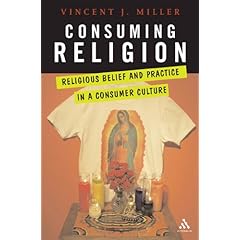
This rather dense look at how consumer culture affects faith by Georgetown theologian Vincent J. Miller is becoming one of my favorite reads. I thought I'd be able to pass through this book quicker, but I've found myself reading and rereading parts to get the concepts in my head. This book has also helped me understand a few other books I'm reading on postmodern philosophy and our culture.

Guy Debord is an interesting philosopher who takes his ques from Marx as well as Henri Lefebvre. I've posted a quote from Debord a few days ago. This book is an interesting look at how our culture affects us and how we as humans have moved from as "being to having," to now "having to appearing." Thus, our needs and reality become false based upon what we see, the spectacle produced by media and film.

Where so many people thought the Matrix movies were based somehow strangely on the gospels, the real inspiration comes from this french postmodern philosopher. Basically we live in a false reality, created by false desires because all that matters in assuaging the consumers desire for more.
And finally here's some works I'm either referencing, beginning, or hope to pick up in the near future:





January 7, 2009
Vegetarians Beware
The very reason you may be avoiding beef, poultry, and pork is trickling down into the veggies you love.
Truth as False
"In a world that is really upside down, the true is a moment of the false."
-Guy Debord, The Society of Spectactle
For Debord our reality is shaped by what we see and primarily we see media and the culture produced by late capitalism. For Marx humans went from "being to having" with the rise of the market economy and alienation of productivity. For Debord humans have moved from "having to appearing."
Our world is upside down because humans who at their core are creators and find meaning in capability, are reduced to passive recieptients of the spectactle. Television, movies, and media become societies way of giving meaning, solidarity, and the illusion that we participate in the world (video games like fishing, golfing, etc come to mind). Alienation prevails, humans relate to one another by sitting solitarily in their homes watching the same movies, news, or sports events which become the fabric of society.
Thus, truth is really false. Reality is a creation of the spectactle.
The church who wishes to Incarnate the life, death, and resurrection of Christ, must realize that it's truth will present itself as false. When we try and allow the culture of media and television to shape how we pronounce our truth then we've already lost our voice in the meaningless array of consumption.
Seeing reality for what it truly is is a difficult, yet human necessity. Living into the Kingdom of God means living out of the false reality of media. Solidarity is not the culture of media, but relationships, advocacy, and dependency.
-Guy Debord, The Society of Spectactle
For Debord our reality is shaped by what we see and primarily we see media and the culture produced by late capitalism. For Marx humans went from "being to having" with the rise of the market economy and alienation of productivity. For Debord humans have moved from "having to appearing."
Our world is upside down because humans who at their core are creators and find meaning in capability, are reduced to passive recieptients of the spectactle. Television, movies, and media become societies way of giving meaning, solidarity, and the illusion that we participate in the world (video games like fishing, golfing, etc come to mind). Alienation prevails, humans relate to one another by sitting solitarily in their homes watching the same movies, news, or sports events which become the fabric of society.
Thus, truth is really false. Reality is a creation of the spectactle.
The church who wishes to Incarnate the life, death, and resurrection of Christ, must realize that it's truth will present itself as false. When we try and allow the culture of media and television to shape how we pronounce our truth then we've already lost our voice in the meaningless array of consumption.
Seeing reality for what it truly is is a difficult, yet human necessity. Living into the Kingdom of God means living out of the false reality of media. Solidarity is not the culture of media, but relationships, advocacy, and dependency.
Subscribe to:
Posts (Atom)


 Posts
Posts


